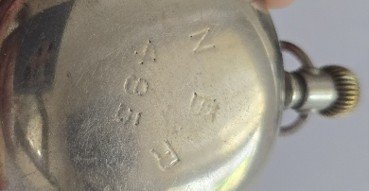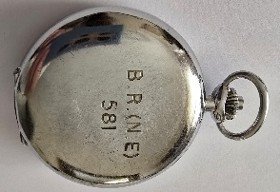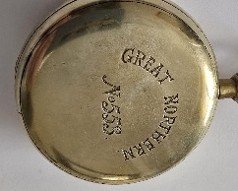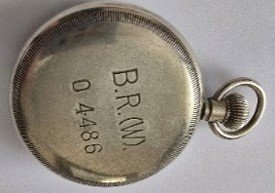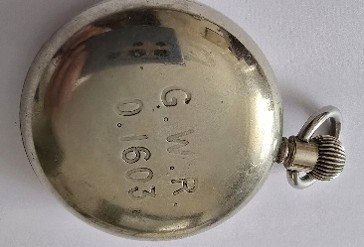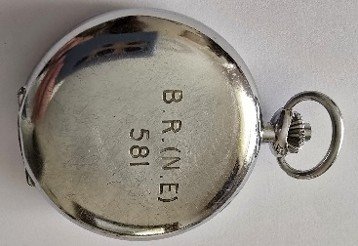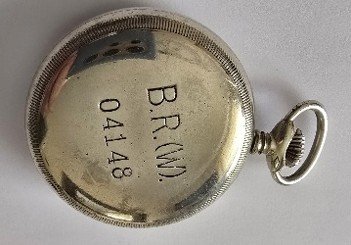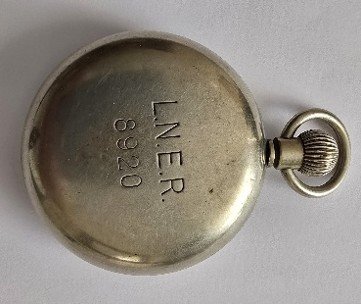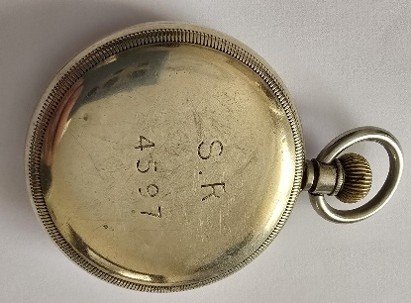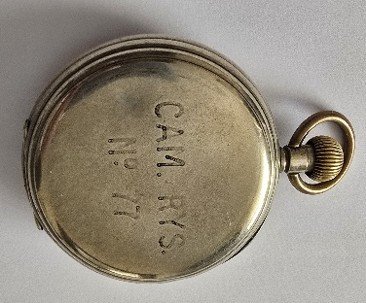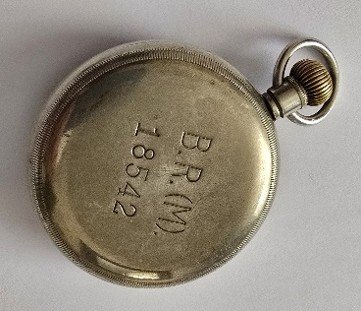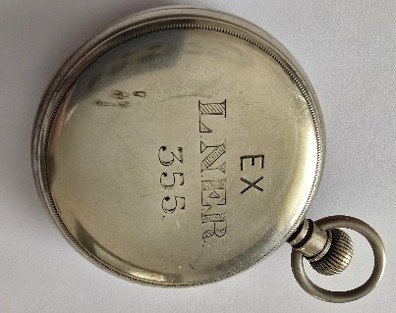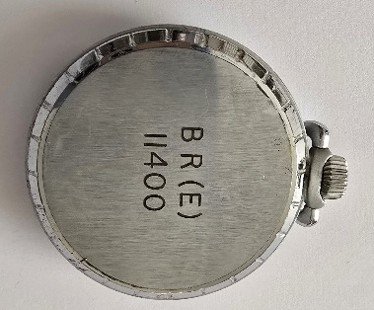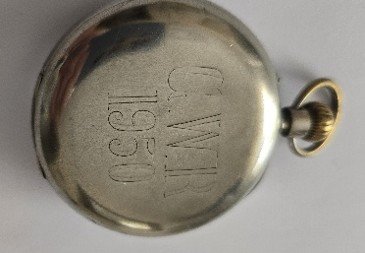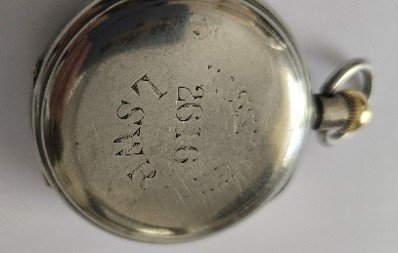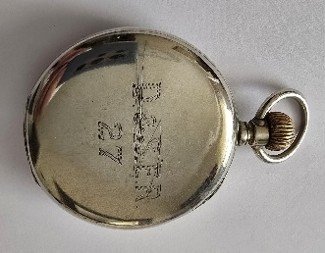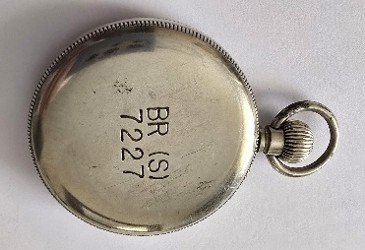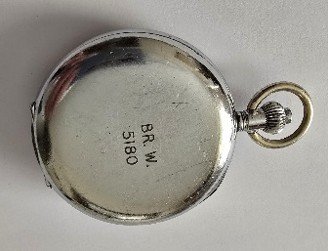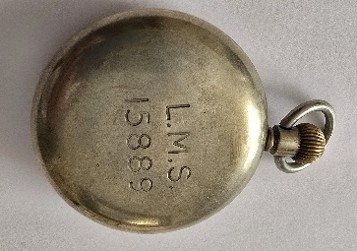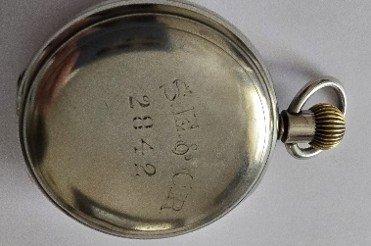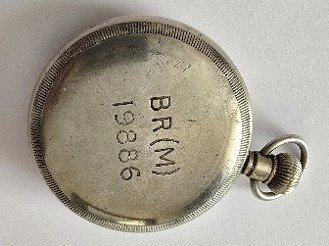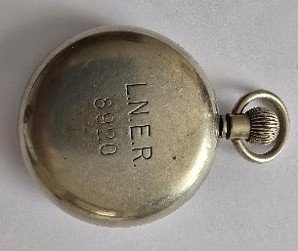
Railway-issued pocket watches represent a specialised yet often overlooked area of British railway heritage. From the mid-nineteenth century until the late 1960s, these timepieces formed an essential part of railway operations, where accurate timekeeping was fundamental to safety, scheduling, and efficiency.
Like military-issued watches, railway pocket watches were practical instruments rather than luxury items. Issued to railway employees whose duties depended upon strict adherence to timetables, they were typically robust, highly legible, and designed for daily use in demanding working environments. Carried on a watch chain and worn with a railway uniform waistcoat, they served as indispensable tools of the trade.
As Britain's railway system evolved through the steam, diesel, and electric eras, the watches issued to railway staff evolved alongside it. These watches represented valuable company property and were expected to be maintained to a high standard. Loss, damage, negligence, or unauthorised use could result in disciplinary action or financial penalties.
Today, railway-issued pocket watches provide collectors with a tangible connection to Britain's industrial and transport history, offering a rich field of study encompassing railway companies, manufacturers, military influences, marking systems, and changing operational requirements.
Historical Development of Britain's Railways
Understanding the evolution of the British railway network provides essential context for the study of railway-issued timepieces.
Origins of Rail Transport (1560s–1830)
The origins of British railways can be traced to wooden wagonways used in mining districts from the sixteenth century onwards. These early horse-drawn systems gradually developed into more sophisticated tramways and railways during the eighteenth century.
Key developments included:
- Early wagonways in Cumbria, Nottinghamshire, Durham, and Lancashire.
- The introduction of cast-iron rails in the late eighteenth century.
- The first public passenger railway service on the Swansea and Mumbles Railway in 1807.
- The development of practical steam locomotives by Richard Trevithick, John Blenkinsop, Matthew Murray, William Hedley, Timothy Hackworth, and George Stephenson.
The opening of the Stockton and Darlington Railway in 1825 marked the world's first public railway to use steam locomotives for both freight and passenger traffic.
Railway Expansion and the Victorian Era (1830–1900)
The opening of the Liverpool and Manchester Railway in 1830 established the model for the modern railway, introducing scheduled passenger services, purpose-built stations, and integrated freight facilities.
During the 1840s, Britain experienced "Railway Mania," a period of intense investment and expansion. Hundreds of private railway companies constructed lines throughout England, Scotland, and Wales, creating a rapidly growing national network.
Important developments included:
- Construction of major London termini such as Euston, Paddington, King's Cross, and Liverpool Street.
- Growing government involvement through railway regulation and safety oversight.
- Creation of the Railway Inspectorate in 1840.
- Introduction of minimum standards for passenger accommodation and operational safety.
The Gauge Question
One of the most significant technical disputes of the nineteenth century concerned track gauge.
- The Great Western Railway adopted Isambard Kingdom Brunel's broad gauge of 7 ft 0¼ in.
- Most other railways adopted the standard gauge of 4 ft 8½ in.
The resulting incompatibility became known as the "Gauge War." By 1892, the broad-gauge system had been abandoned, creating a unified national standard.
Consolidation and Railway Maturity (1900–1922)
By the early twentieth century, the era of uncontrolled expansion had ended. Many smaller companies merged or were absorbed by larger operators, reducing the number of independent railway companies.
During the First World War (1914–1918), the government assumed control of the railway network to support military logistics and national transport requirements. Wartime administration demonstrated the advantages of central coordination and exposed the inefficiencies of the fragmented pre-war railway structure.
The experience laid the foundations for major post-war reorganisation.
The Big Four Railway Companies (1923–1947)
The Railways Act 1921 fundamentally reshaped Britain's railways. On 1 January 1923, more than one hundred railway companies were consolidated into four major regional systems:
London, Midland and Scottish Railway (LMS)
Serving London, the Midlands, North-West England, and much of Scotland.
London and North Eastern Railway (LNER)
Operating the East Coast Main Line and routes throughout eastern and north-eastern England and Scotland.
Great Western Railway (GWR)
Remaining largely intact from its pre-grouping form, serving London, South Wales, the West Country, and parts of the Midlands.
Southern Railway (SR)
Specialising in commuter services south of London and routes to Channel ports.
The Big Four era is particularly significant for collectors, as many railway-issued pocket watches bear markings associated with these companies.
Technological Progress
Despite growing competition from road transport, the period witnessed important innovations:
- Expansion of railway electrification, particularly by the Southern Railway.
- Introduction of diesel railcars by the Great Western Railway.
- Streamlined express locomotives such as the LNER A4 class.
- Increasing standardisation of railway equipment, including timekeeping devices.
The Second World War
During the Second World War, the railway companies effectively operated as a single coordinated system under government direction. Heavy wartime use and bomb damage created substantial maintenance backlogs, contributing to calls for full nationalisation after the war.
British Railways and Nationalisation (1948–1968)
On 1 January 1948, the Big Four companies were nationalised to form British Railways.
Initially, much of the inherited infrastructure and rolling stock remained unchanged, including many operational practices and equipment standards established by the former companies.
For collectors, the British Railways period represents the final major chapter of railway-issued pocket watch usage.
The 1955 Modernisation Plan
In 1955, British Railways launched an ambitious programme to modernise the network through:
- Replacement of steam locomotives.
- Introduction of diesel traction.
- Expansion of electric services.
- Modernisation of signalling and infrastructure.
These changes gradually altered the operational environment in which railway-issued watches were used.
The Beeching Reforms
By the early 1960s, increasing competition from road transport and declining revenues prompted a major review of the railway network.
Under the leadership of Dr Richard Beeching, reports published in 1963 and 1965 recommended extensive rationalisation.
The resulting programme led to:
- Closure of more than 2,000 stations.
- Removal of approximately 5,000 miles of railway.
- Elimination of many rural and lightly used branch lines.
- Concentration of resources on major intercity and commuter routes.
These reforms transformed Britain's railways and coincided with the final years in which traditional railway-issued pocket watches remained in widespread operational use.
Collecting Railway-Issued Pocket Watches
For collecting purposes, British railway-issued pocket watches can be broadly divided into four principal periods:
- Early Railway Companies (c.1850–1900)
The era of independent Victorian railway companies and early standardisation. - Pre-Grouping Railways (1900–1922)
The final years before consolidation, often featuring company-specific markings and issue systems. - The Big Four Period (1923–1947)
The most recognisable collecting field, encompassing LMS, LNER, GWR, and Southern Railway-issued watches. - British Railways Period (1948–1968)
The final chapter of railway-issued pocket watches before changing operational practices and modern wristwatches gradually replaced them.
Legacy
Railway-issued pocket watches are more than simply timepieces. They are historical artefacts that reflect the development of Britain's railway system, the evolution of industrial timekeeping, and the operational discipline upon which railway safety depended.
Their surviving markings, serial numbers, manufacturers, and company associations provide collectors and historians with valuable evidence of how Britain's railways functioned across more than a century of technological and organisational change.